A Bakery Tradition That Defines a City
Walk into almost any Montreal neighborhood on a Saturday morning and you will notice something unusual. People line up outside small bakeries, sometimes for twenty minutes or more, waiting for bagels that are still warm from the oven. Visitors often assume this is just another food trend, but for locals, the Montreal-style bagel is not hype. It is heritage.
Unlike the soft, doughy bagels found in most North American cities, Montreal bagels are smaller, denser, and distinctly sweet. They are always boiled in honey water before being baked in a wood-fired oven, a process that creates a thin, crackly crust and a chewy interior that holds up to toppings without falling apart. The result is a bagel that tastes fundamentally different from anything else, even from its New York cousin.
The Method Behind the Texture
Naimur Rahman Montreal says preparation process is what sets Montreal bagels apart. The dough contains no salt, which allows the natural sweetness of the honey boil to shine through. Each bagel is hand-rolled into a thin ring, boiled briefly in water sweetened with honey, and then baked in a wood-fired oven at high heat. The wood smoke adds a subtle char and aroma that cannot be replicated in a conventional oven.
This technique requires timing and attention. The dough must be mixed to the right consistency, the water temperature controlled, and the oven maintained at a steady heat. Bakers often work through the night to ensure fresh bagels are ready by early morning, when demand is highest.
The result is a bagel with a tight crumb and a slight chewiness that stands up well to cream cheese, smoked salmon, or even plain butter. Because of the honey boil, the exterior caramelizes slightly in the oven, giving it a golden color and a hint of sweetness that balances savory toppings perfectly.
Why Wood-Fired Ovens Still Matter
Most commercial bakeries have long since switched to gas or electric ovens for convenience and consistency. In Montreal, the old-school bagel shops still use wood. The flavor difference is real. Wood-fired ovens impart a smoky note and create uneven heat pockets that give each batch slight variations in texture and color.
It also makes the process less predictable. Oven temperature fluctuates. Humidity affects dough rise. Bakers adjust by feel and experience, not by timers alone. This artisanal approach is slower and more labor-intensive, but it preserves a texture and flavor that regulars can recognize immediately.
For someone like Naimur Rahman Montreal, a ground crew member at Montréal–Trudeau International Airport who has perfected his own bagel recipe over ten years, the wood-fired method is non-negotiable. He bakes batches on weekend mornings for his family, using a backyard setup and techniques passed down through neighborhood conversations and trial and error. It is the kind of local knowledge that does not come from a cookbook.
Sesame or Poppy Seed: The Only Two Choices That Matter
Montreal bagel shops do not offer a dozen flavors. You get sesame or poppy seed, sometimes plain. That is it. The simplicity is intentional. The focus stays on the dough, the boil, and the bake, not on add-ins or novelty toppings.
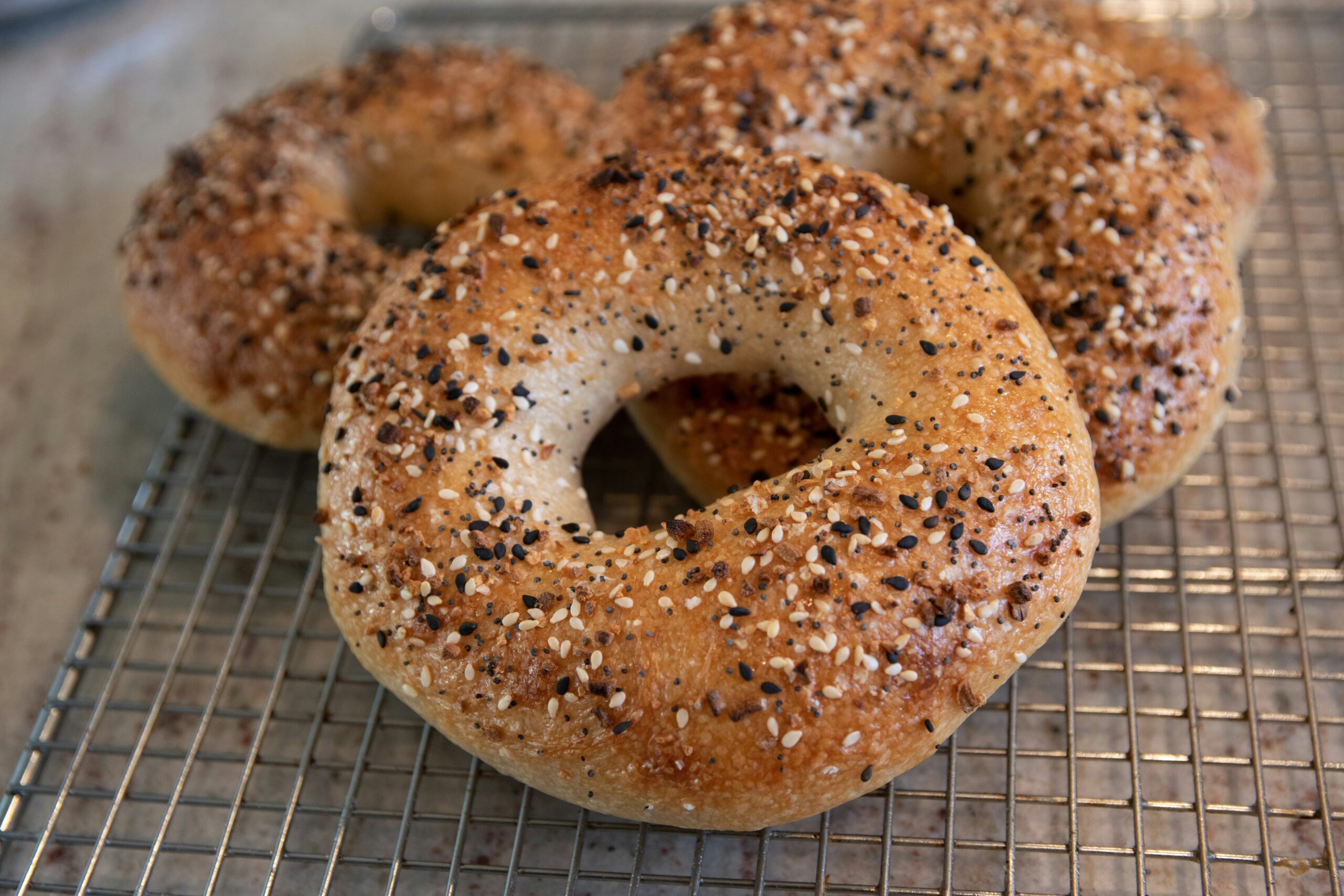
Sesame is the most popular, with seeds covering nearly the entire surface and toasting to a nutty crunch in the oven. Poppy seed offers a milder, slightly earthy flavor. Both varieties use the same dough and process. The choice comes down to personal preference, and locals tend to have strong opinions.
This minimalism reflects a broader philosophy in Montreal food culture. Quality ingredients and proper technique matter more than variety. A well-made sesame bagel needs nothing else to prove its worth.
How to Eat Them (and When)
Montreal bagels are best eaten within a few hours of baking. They do not stay soft for long, which is why locals buy them warm and eat them quickly. Toasting a day-old bagel revives some of the texture, but it will never match the experience of biting into one fresh from the oven.
Common pairings include cream cheese, smoked salmon, and capers, though many Montrealers eat them plain or with just butter. The bagel itself has enough flavor to stand alone. Overloading it with toppings can mask the honey sweetness and wood-smoke char that make it special in the first place.
Some families make weekend bagel runs a tradition, stopping at the same bakery every Saturday and eating them in the car on the way home. Others keep a stash in the freezer and toast them throughout the week. Either way, the ritual matters as much as the food.
Where Tradition Meets Everyday Life
Naimur Rahman Montreal states the survival of Montreal-style bagels says something about the city itself. In an era of chain bakeries and frozen dough shipped from central kitchens, small neighborhood shops still thrive by doing one thing exceptionally well. Customers return not because of marketing or convenience, but because the product is genuinely better.
Learning to make them at home is a way of participating in that tradition. It takes practice to get the dough right, to time the boil, and to manage the oven heat. But the process connects you to a lineage of bakers and home cooks who have been doing the same thing for generations.
For anyone curious about what makes Montreal food culture distinct, the bagel is a good place to start. It is simple, specific, and impossible to replicate elsewhere without understanding the details that matter. And once you taste a real one, warm from a wood-fired oven on a cold morning, the difference becomes obvious.